
We’re delighted to share an interesting news item about yet another inhabitant of the Peruvian jungle. Ichthyology enthusiasts, hold your breath… unique representatives of Amazonian armored catfish have taken up residence in our eco‑lodge «Cordillera Escalera»! At the end of June, we released 150 fry of this species into our pond — the one we’re going to talk about in our news item.
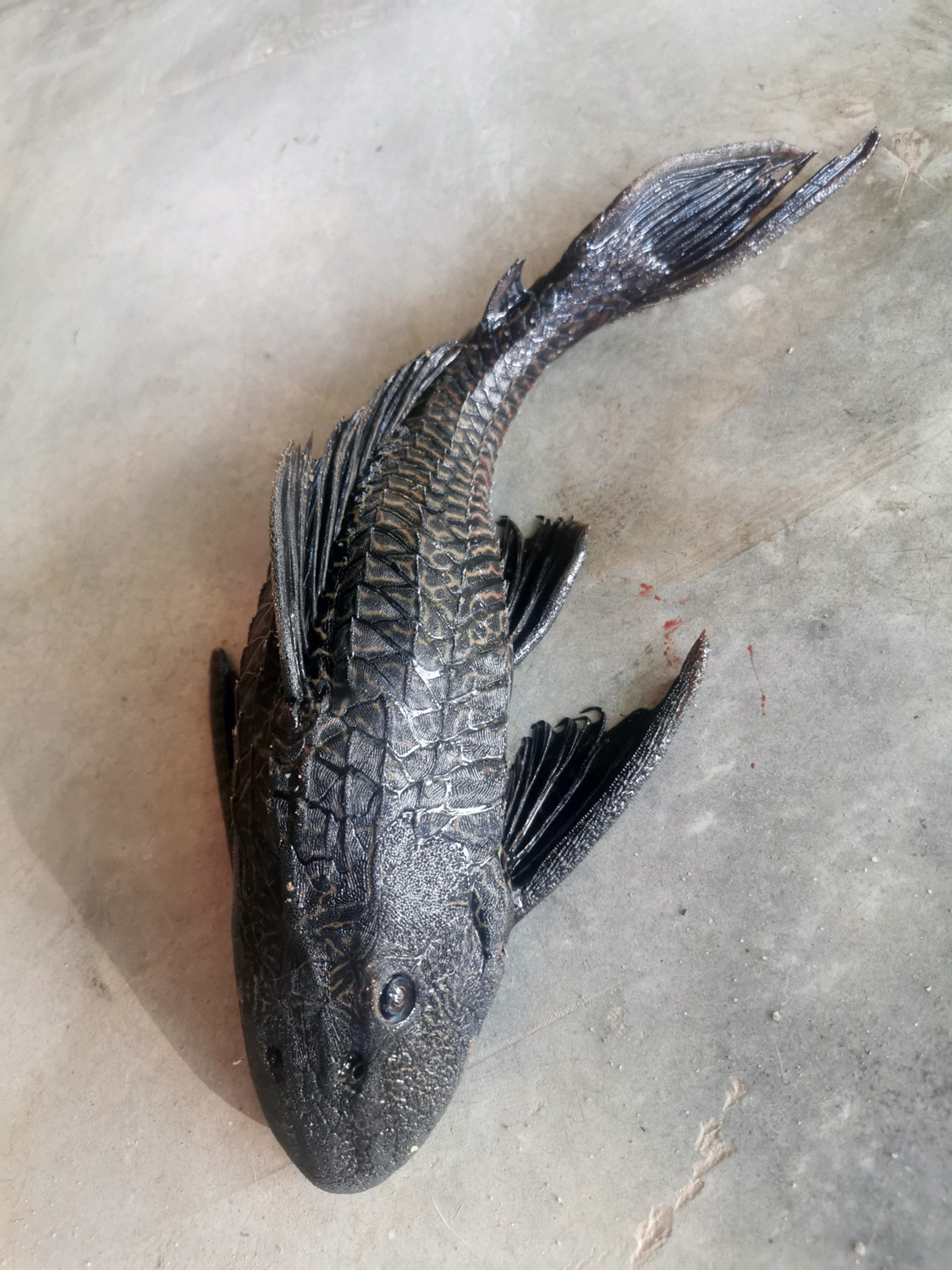
So, a few words about the characteristics of our new settlers. Karachama (lat. Pseudorinelepis genibarbis) is a species of fish in the armored catfish family (Loricariidae), native to the upper reaches of the Amazon basin. By the way, it is the only representative of this genus. The name of this fish translates from Greek as follows: pseudes — «fake,» rhinos — «nose,» lepis — «scale.» The common name «carachama» comes from the Quechua language — «rough skin,» because the carachama’s body is covered with bony plates that resemble armor. They lead a benthic lifestyle, feeding on algae. The average length of an adult individual reaches 35–40 cm, but in the Peruvian Amazon, particularly large specimens are sometimes found, which are called «carachama‑mama»: they can reach a meter in length.
It’s surprising, because the carachama is considered a prehistoric, or «thousand‑year‑old,» fish, because the modern species has changed very little over millions of years and is morphologically almost identical to its fossil ancestors. The carachama has undergone almost no evolutionary changes thanks to three anatomical and biological factors. The first is the protective shell: its body is covered with armor made of bony plates and rigid spines that protect it from predators. The second is its extraordinary survivability: it can breathe oxygen outside of water for several days and withstand drought or conditions with low oxygen content. The third is its primitive feeding adaptations: it has a sucker‑shaped mouth with teeth that are adapted for scraping wood and algae from the riverbed. These armored catfish survived major mass extinctions while retaining their primitive characteristics.
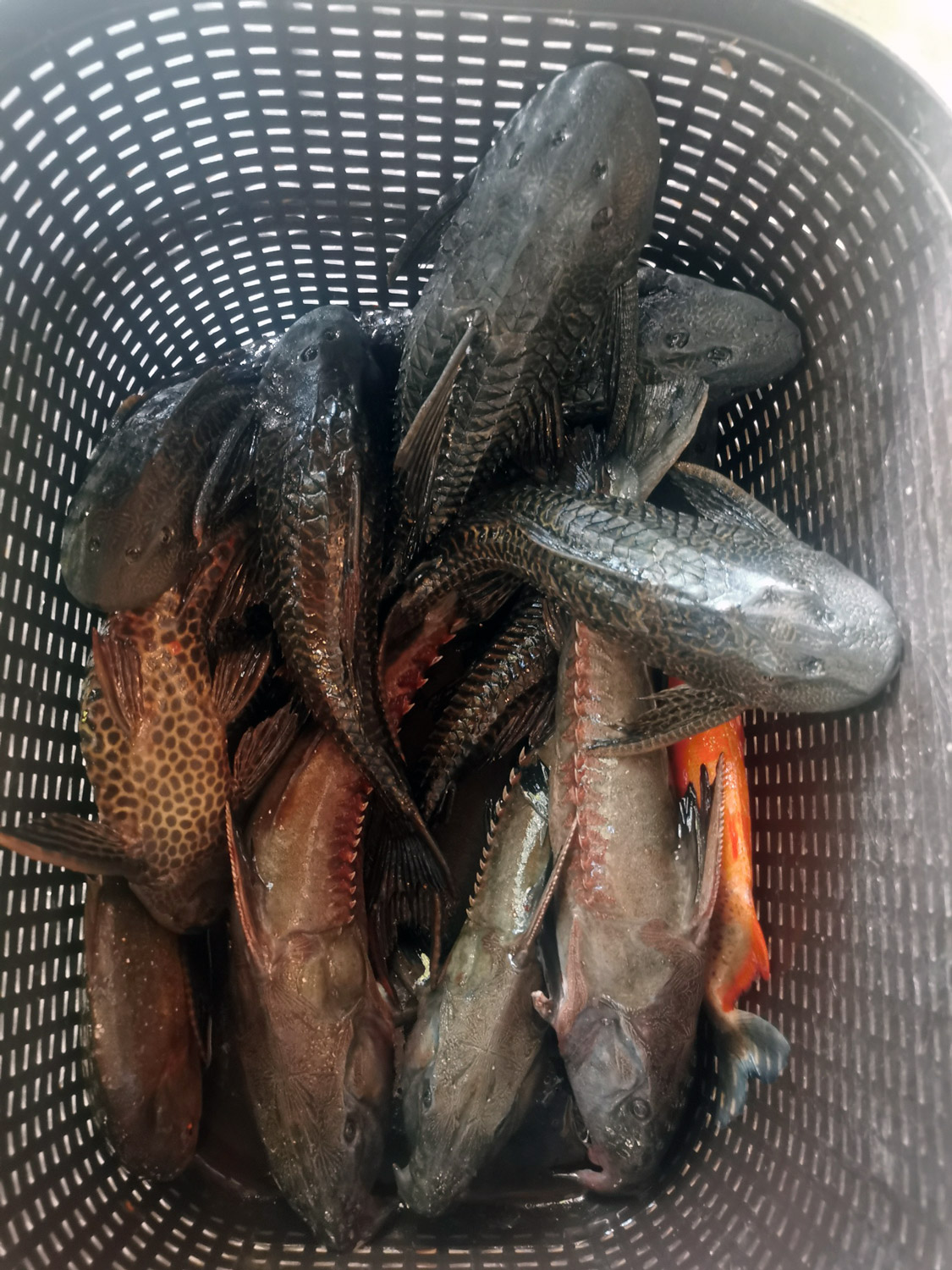
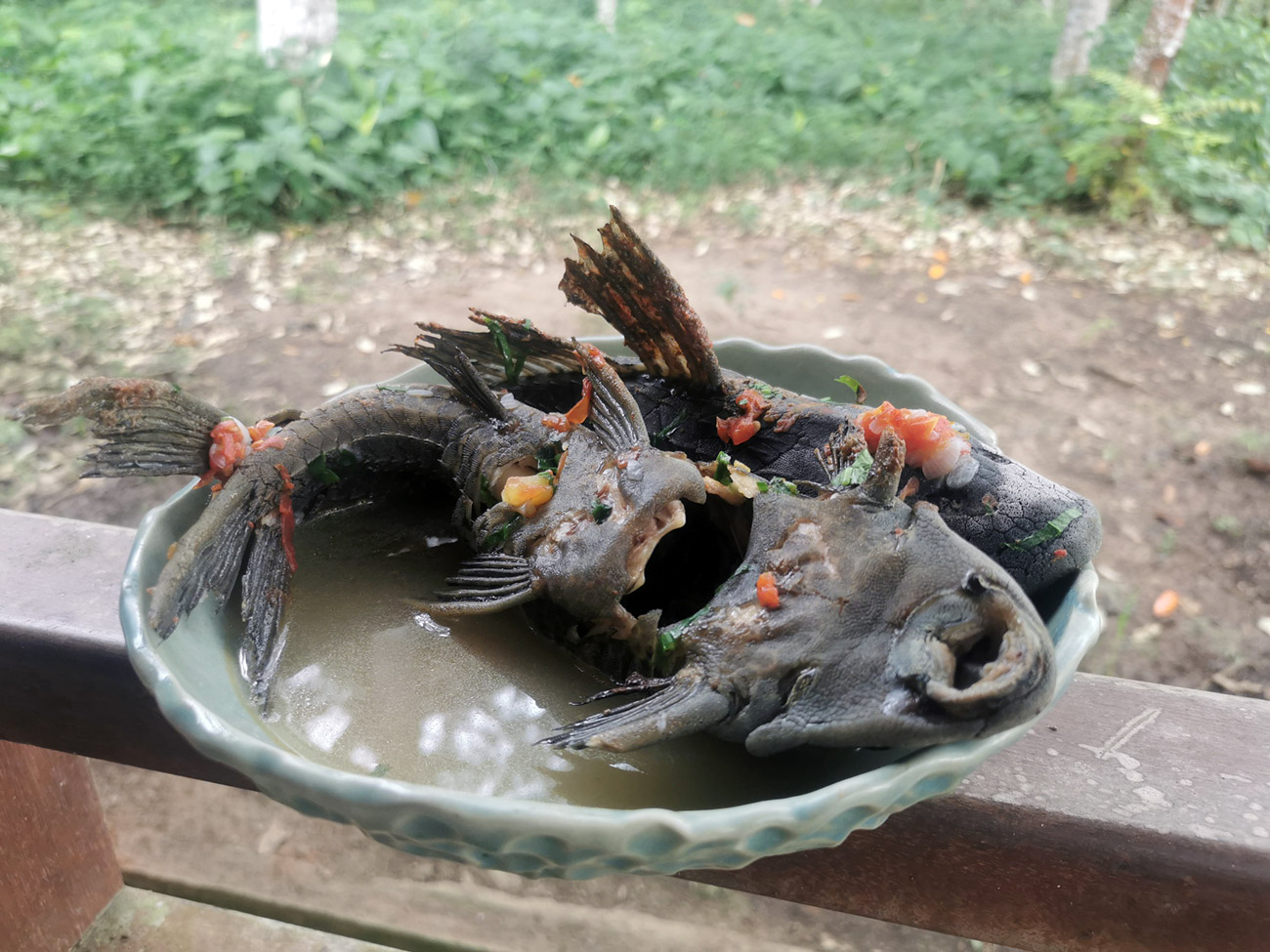
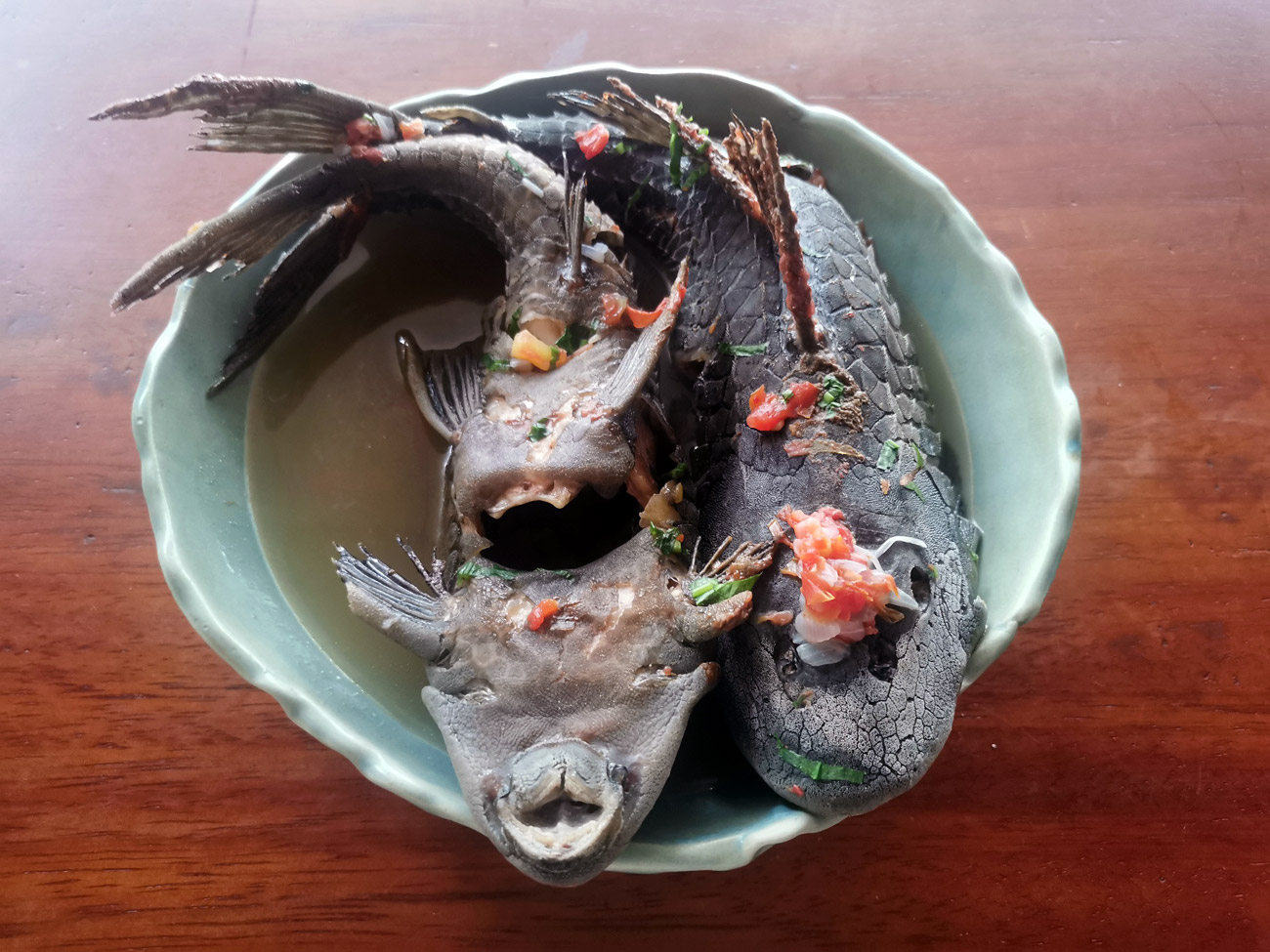
In the Amazon, this fish is valued for its nutritional properties. Karachama is considered one of the best remedies for combating anemia due to its content of phosphorus, iron, iodine, and vitamins (A, C, E, B12). Children are обязательно given dishes made from this fish, in the belief that it improves brain function and ensures proper growth. In the culinary tradition, karachama is the main ingredient of the famous Amazonian soup «chupe de karachama.»
There are several legends about this interesting fish. One of the legends tells of an elderly man who practiced magic and created a certain substance for transformations, for which the Sun God punished him and sent illnesses upon him. The man was confined to bed and, feeling like a burden to the tribe, asked his relatives to take him far away into the jungle and build him a hut in a secluded spot on the riverbank. Over time, the man was consumed by loneliness and his own grief. His body gradually began to transform: his skin hardened, turning into a shell, his head became flat, and fins began to grow. Eventually, he turned into a fish, condemned to live on the muddy and dark bottom of the Amazon rivers, gorges, and lakes. This is how the first karachama appeared. This story serves as a warning and a lesson about respecting one’s elders and about the cruelty of the gods of nature in the event of attempts to disregard their laws.
Another myth tells of the connection between the karachama and the history of human origins. It is said that the first inhabitants of the jungle descended from creatures that managed to survive the gods’ punishments by turning into karachamas. Therefore, in many local tribes, the karachama spirit is the protector of water bodies and guards the tribes from the «bad energies» of water.
The Amazonian flora and fauna never cease to amaze us with their wonders. At our eco‑lodge «Cordillera Escalera,» we treat local traditions with great respect and strive to protect them just as we protect the flora and fauna surrounding the hotel. And we offer our guests a unique opportunity to see its inhabitants in person, such as the carachama.